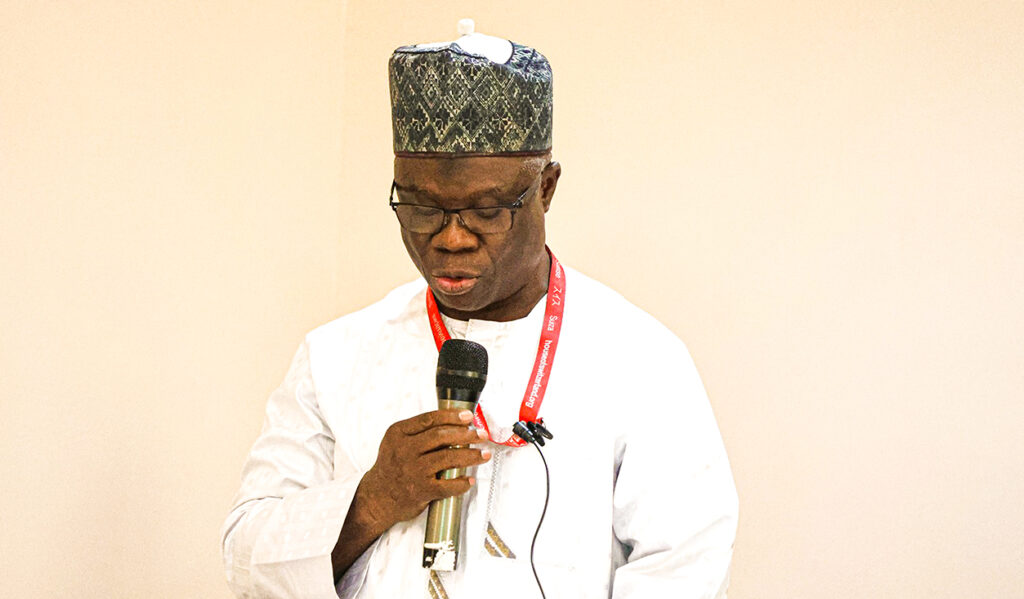
Welcome Statement by Comrade Dr. Zikirullahi M. Ibrahim, Executive Director, Resource Center for Human Rights and Civic Education (CHRICED), at the Validation Workshop on the Draft Report of the Facility Maternal, Newborn and Child Health (MNCH) Readiness Assessment in Kano State BON Hotel, Kano
Protocol
The Honourable Commissioner of Health,
The Permanent Secretary,
Directors and staff of the Kano State Ministry of Health and its agencies,
Representatives of government institutions,
Esteemed development partners,
Distinguished colleagues from civil society,
Our CHRICED MEL Consultant, Mrs. Loveth Metiboba,
Ladies and gentlemen,
On behalf of the Board of Directors and staff of the Resource Centre for Human Rights and Civic Education (CHRICED), I warmly welcome you to this Validation Workshop on the Draft Report of the Facility Maternal, Newborn and Child Health (MNCH) Readiness Assessment in Kano State.
Today’s gathering is a significant step in our collective journey toward strengthening maternal, newborn, and child health outcomes in the state. This workshop provides an opportunity to critically review and validate the draft report—its methodology, findings, conclusions, and recommendations. More importantly, it offers a platform for stakeholders to contribute expert insights that will ensure the final report reflects the lived realities within our primary healthcare system and supports evidence based planning for improved MNCH service delivery.
I sincerely appreciate each of you for honouring this invitation despite your demanding schedules. Your presence is a powerful testament to our shared commitment to confronting the persistent challenge of maternal and child mortality in Kano State.
Maternal and child health is not only a public health concern; it is a moral imperative and a global development priority. We acknowledge the efforts of the Kano State Government in addressing these challenges. As a civil society organization, CHRICED believes that one of the most meaningful ways to support government is by empowering citizens with accurate information, highlighting what is working, and constructively identifying areas that require urgent attention.
As we examine the preliminary findings today, it is important to reflect deeply on the state of MNCH service delivery in Kano. Nigeria currently accounts for nearly 20% of global maternal and child deaths, with Kano State bearing a disproportionate share of this burden. Reversing this trend requires bold, coordinated, and sustained action—improving access to quality healthcare for women and children, strengthening emergency transport systems, upgrading primary healthcare facilities, and investing in the training and welfare of frontline health workers.
Since 2016, CHRICED has worked alongside government institutions, community actors, and development partners to advance practical solutions for improving MNCH outcomes in Kano State. Our advocacy has consistently focused on ensuring that every woman and child—regardless of socio economic status—can access quality, life saving healthcare services. We also acknowledge the invaluable contributions of Foreign, Commonwealth & Development Office, FCDO and other international partners whose support continues to strengthen the MNCH landscape in the state.
It was in this spirit of partnership and shared responsibility that CHRICED undertook the MNCH Readiness Assessment across primary healthcare facilities in Kano State. The study provides a comprehensive analysis of service delivery capacity, infrastructure, human resources, essential commodities, and the barriers faced by both providers and communities. We are confident that the findings will offer actionable, evidence based insights to guide policy reforms and targeted investments aimed at reducing maternal and child mortality.
As we proceed, I appeal to all participants to engage rigorously with the interim report. Your perspectives, critiques, and recommendations are essential to enriching the final document and ensuring it becomes a valuable resource for government, development partners, researchers, and all stakeholders committed to strengthening Kano’s primary healthcare system. I am confident that your contributions today will help shape a more responsive, equitable, and effective MNCH framework for our state.
In closing, I extend our profound gratitude to Misereor/KZE of Germany for their unwavering support and dedication to improving the health and wellbeing of women and children in Nigeria, and particularly in Kano State. I also express heartfelt appreciation to the Board and staff of CHRICED, whose commitment and hard work continue to drive our mission for accountable and people centred governance.
Thank you all for being here. I wish us productive and impactful deliberations.