
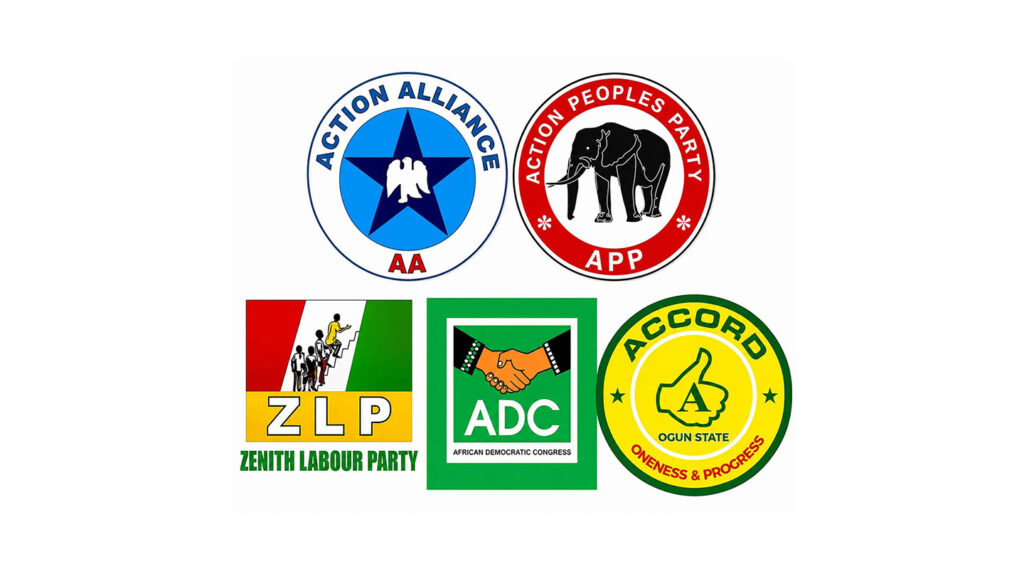
The Resource Centre for Human Rights & Civic Education (CHRICED) has been following with deep concern the recent judgment of the Federal High Court in Abuja directing the Independent National Electoral Commission (INEC) to deregister the African Democratic Congress (ADC) and four other political parties for allegedly failing to meet constitutional performance thresholds.
On Monday, the Court, presided over by Justice Peter Lifu, ordered INEC to deregister the affected parties on the grounds that they did not secure 25 per cent of the votes in the last general elections. While CHRICED respects the constitutional authority of the courts to interpret the law, we must express our unease that such a consequential decision appears to rely solely on a narrow reading of constitutional provisions—without interrogating the intentions behind the suit, the broader democratic context, or the long-term implications for Nigeria’s political future.
A matter as weighty as the deregistration of political parties should not be approached as a mere administrative exercise. It demands a holistic consideration of regional and international democratic norms, including the African Charter on Human and Peoples’ Rights (ACHPR) and relevant United Nations instruments that safeguard political participation, freedom of association, and the right of citizens to meaningful political choice.
As an organization committed to democratic governance, constitutionalism, human rights, and civic participation, CHRICED recognizes both the role of the judiciary and the regulatory mandate of INEC. Yet beyond the legal technicalities lies a deeper question: What kind of democracy are we building if political pluralism is weakened rather than strengthened?
Democracy is not simply the periodic conduct of elections. It is the continuous protection of citizens’ rights to organize, to associate, and to choose from a broad spectrum of political alternatives. Any action that narrows this spectrum must be subjected to the highest standards of fairness, transparency, and public accountability.
The deregistration of political parties—especially on the eve of another electoral cycle—raises legitimate fears about the shrinking of civic space and the erosion of political alternatives. Whether intended or not, such actions risk reinforcing the perception that dissenting or opposition voices are being systematically diminished at a time when Nigerians need more choices, not fewer.
CHRICED is particularly troubled by the implications for political competition. A vibrant democracy thrives on diversity of ideas and the availability of multiple platforms through which citizens can express their aspirations. When the political field is reduced to a contest among a handful of dominant actors, the result is a democracy drained of inclusiveness, accountability, and public trust.
While the Court may have acted within the letter of the law, Nigerians are justified in asking whether the same standards have been applied consistently over time. The history of party deregistration in Nigeria is replete with concerns about selective enforcement and inconsistent application of electoral laws. Public confidence in democratic institutions depends not only on legal correctness but also on the perception of fairness and impartiality.
The timing of this judgment is equally troubling. Some of the affected parties have recently begun to play more visible roles within the opposition landscape. In a political climate where many citizens already fear the contraction of civic space, decisions that affect political parties must be handled with utmost transparency to avoid deepening public distrust.
CHRICED therefore calls for caution in the implementation of this judgment, especially as the matter is likely to proceed on appeal. All affected parties must be granted full access to legal remedies and due process, in line with democratic norms and constitutional guarantees.
Furthermore, CHRICED urges INEC, the judiciary, political parties, and all democratic stakeholders to prioritize the long-term health of Nigeria’s democracy over short-term political calculations. Electoral reforms should expand—not constrict—political participation. They should strengthen—not weaken—citizens’ confidence in democratic institutions. And they should ensure a level playing field for all political actors.
As Nigeria approaches another electoral cycle, it is imperative that democratic institutions act in ways that inspire trust rather than suspicion. Democracy flourishes when citizens are presented with genuine political alternatives, when opposition voices are allowed to compete freely, and when the rules of engagement are applied equally to all.
Ultimately, the question before the nation is not merely whether the law permits the deregistration of political parties. The more profound question is whether such actions—both in substance and perception—advance or undermine democratic participation, political inclusion, and public confidence in Nigeria’s democratic future.
CHRICED reaffirms that democracy is strongest when political competition is encouraged, civic space is protected, and citizens are empowered with meaningful choices at the ballot box.
Signed:
Comrade Dr. Ibrahim M. Zikirullahi
Executive Director