
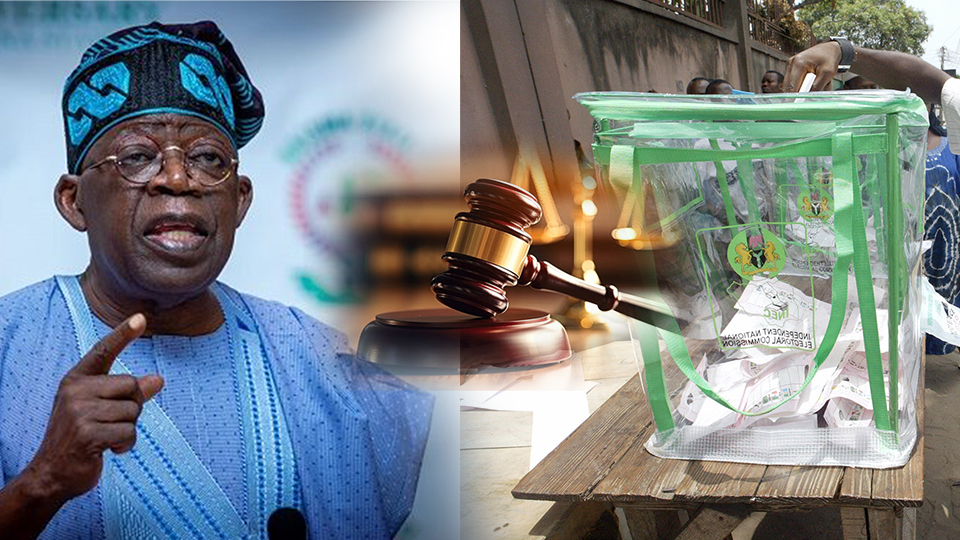
The Resource Centre for Human Rights and Civic Education (CHRICED) expresses profound alarm over the Federal Government’s decision to allocate an unprecedented ₦135.22 billion for anticipated election litigations ahead of the 2027 general elections. This development raises urgent questions about Nigeria’s electoral direction and the government’s commitment to transparency, accountability, and credible democratic processes.
The Federal Government has proposed ₦873.78 billion for the 2027 general elections and an additional ₦171 billion for INEC’s 2026 operations—already a heavy burden on a struggling economy. Yet, buried within the Service Wide Votes is a new and opaque budget line: ₦135.22 billion dedicated solely to election-related lawsuits, representing 15.48% of the entire election budget.
This provision is not only excessive—it is deeply troubling. Its sudden appearance in the revised 2026 budget, absent in earlier drafts, raises red flags about transparency and intent. The lack of clarity on how these funds will be used further undermines public confidence in the electoral process.
INEC already maintains legal departments in all 36 states and the FCT, mandated to manage electoral disputes. Allocating an additional ₦135.22 billion for litigation suggests an institutional expectation of widespread electoral failure rather than a commitment to preventing disputes in the first place.
This raises critical questions of national importance:
• Is the government preparing for credible elections—or budgeting for electoral chaos?
• Why invest so heavily in resolving disputes instead of preventing them?
• Does this signal a growing dependence on the judiciary to decide elections rather than the electorate?
• How can INEC claim neutrality when such vast sums are earmarked for legal battles?
At a time when Nigerians face soaring inflation, rising unemployment, deepening poverty, and crushing public debt, allocating ₦135.22 billion to anticipated election disputes is both insensitive and irresponsible. It reflects a governance culture that normalizes dysfunction and budgets for failure instead of reform.
In any healthy democracy, elections are decided at polling units—not in courtrooms. Preparing financially for large-scale litigation sends a dangerous message: that electoral irregularities are expected, accepted, and even planned for.
The consequences for public trust are severe. Confidence in Nigeria’s democratic institutions—already weakened—risks further collapse. Such a budgetary choice fuels voter apathy, widens the gap between citizens and the state, and undermines the legitimacy of future elections.
CHRICED maintains that this represents a profound misplacement of national priorities. A fraction of ₦135.22 billion, if invested in preventive reforms—such as voter education, improved logistics, reliable technology, transparent result management, and robust training for electoral personnel—would significantly reduce disputes and strengthen electoral credibility.
Moreover, this amount could transform critical sectors like healthcare, education, agriculture, security, and power—areas that directly shape the daily lives of Nigerians. Diverting scarce resources to manage avoidable electoral crises is a disservice to national development.
CHRICED therefore calls on the Federal Government to:
• Provide full public disclosure and justification for the ₦135.22 billion litigation allocation, including clear guidelines and oversight mechanisms.
• Reprioritize electoral spending toward preventive reforms that enhance transparency, efficiency, and credibility.
• Strengthen INEC’s independence and neutrality to rebuild public confidence in the electoral process.
• Reduce reliance on litigation by ensuring elections reflect the genuine will of the people.
• Restore public trust through openness, accountability, and strict adherence to democratic norms.
Nigeria cannot continue to institutionalize electoral dysfunction or normalize budgeting for its consequences. The integrity of elections must be protected at the source—not negotiated in court after the fact. The time has come to restore credibility, rebuild trust, and ensure that democracy truly reflects the will of the Nigerian people.
Signed:
Comrade Dr. Ibrahim M. Zikirullahi
Executive Director, CHRICED