
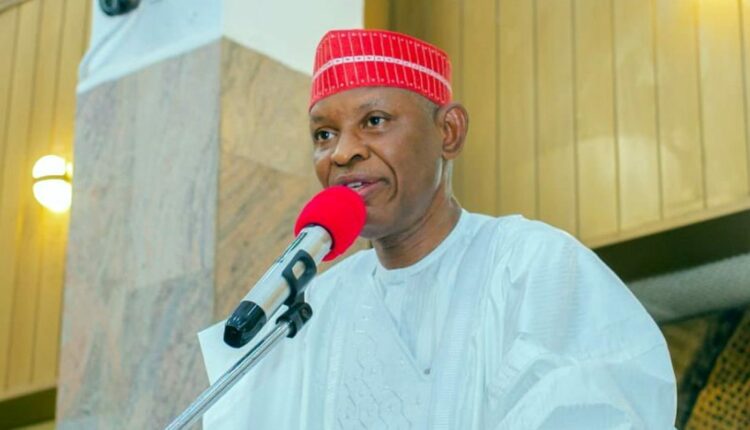
Memorandum Presented by the Resource Centre for Human Rights & Civic Education (CHRICED) at the Kano State House of Assembly Public Hearing on the 2026 Budget
held at the Coronation Hall, Government House, Kano on December 13, 2025
Salutation
The Speaker, Rt. Hon. Jibril Isma’il Falgore, the Deputy Speaker; the Majority Leader; Principal Officers; Honourable Members of the Kano State House of Assembly; esteemed traditional and religious leaders; members of Civil Society Organizations; and members of the press:
On behalf of the Resource Centre for Human Rights & Civic Education (CHRICED), I extend warm greetings. As a knowledge-driven platform of active citizens committed to democracy, accountability, and good governance, CHRICED is honored to once again contribute to this vital budgetary process.
Commendation
We commend the leadership of the Speaker and Principal Officers for their accessibility, open-door policy, and commitment to people-cantered legislation. This openness strengthens democracy and ensures that the voices of citizens are heard in shaping the future of Kano State.
The Challenge Before Us
Honourable Members, despite repeated allocations to health, education, and social services, the lived reality of citizens—especially mothers and children in rural communities—remains dire. Preventable deaths continue to occur, exposing deep cracks in our healthcare delivery system.
CHRICED’s recent Service Availability and Readiness Assessment (SARA) across 91 Primary Health Care (PHC) facilities in 11 Local Government Areas revealed alarming deficits:
• Foundational infrastructure gaps: unreliable power, lack of clean water, and non-functional delivery rooms.
• Rural neglect: LGAs such as Kibiya and Gwarzo recorded infrastructure readiness below 24%, with correspondingly low service utilization.
• Financial burden on citizens: nearly 46% of patients / clients reported out-of-pocket payments at PHCs.
• Drug shortages: essential medicines like Magnesium Sulfate (MgSO₄) were unavailable for an average of 15 days in a single month.
These failures translate into unacceptably high maternal and child mortality risks. Every preventable death is not just a statistic—it is a family shattered, a community weakened, and a future cut short.
Unimplemented FMNCH Law
Honourable members, it has been two and a half years since the Kano State Free Maternal and Child Healthcare Law (2023) was passed and assented to. Yet, its implementation remains stalled. This is not a honour both to the 9th Assembly, which laboured to enact this landmark legislation, and to the people of Kano State, who stand to benefit from it.
While we acknowledge commendable initiatives such as the Maternal and Neonatal Mortality Reduction Innovation and Initiatives (MAMII) and the Sector-Wide Approach (SWAp), the persistence of high mortality rates underscores the urgent need for full implementation of the Free Maternal and Child Healthcare Law.
Our Recommendations
1. Immediate Implementation of the Law
o Establish the Free Maternal and Child Health Consultative Council as mandated in Section 14(1).
o Allocate dedicated funds in the 2026 budget to operationalize the law.
2. Transparency in Constituency Projects
o Adopt a culture of consultation with constituents to identify priority needs.
o Consider a legal framework to regulate constituency projects, modelled after Lagos State, to enhance transparency, legitimacy, and accountability.
3. Strengthened Oversight and Accountability
o Ensure rigorous monitoring of budgetary allocations so that every naira translates into improved services.
o Track outcomes to guarantee that policies deliver tangible benefits to citizens.
Conclusion
The Rt. Hon. Speaker and Honourable Members, history will not judge this Assembly by the number of laws it passed, but by the lives those laws saved. The 2026 budget presents an opportunity to choose life, dignity, and accountability for the people of Kano State.
Let this budget be remembered as the year Kano turned promises into action, laws into lifelines, and allocations into real improvements in the quality of life.
CHRICED stands ready to support this Assembly in ensuring that governance delivers for the people. Thank you for your kind attention.
Signed:
Dr. Ibrahim M. Zikirullahi, FICM, FIMS, FIIM, CMC
Executive Director