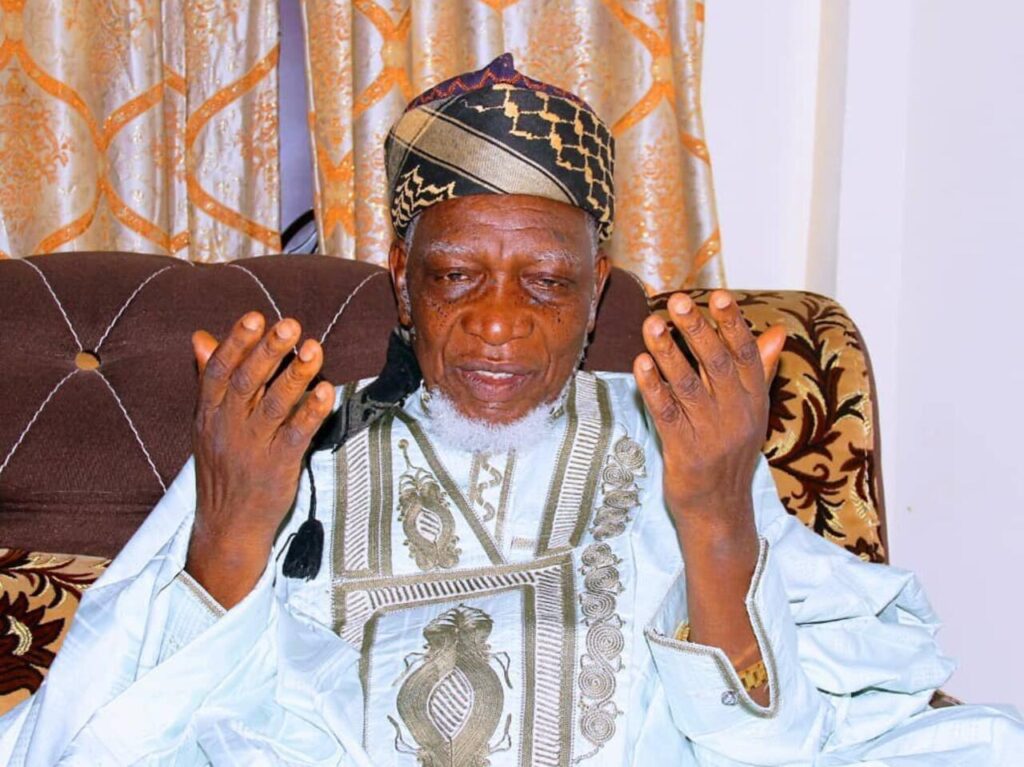
The Resource Centre for Human Rights and Civic Education (CHRICED) strongly condemns the incendiary and deeply troubling remarks made by Sheikh Sani Yahaya Jingir, who recently urged continued Muslim–Muslim presidential tickets ahead of the 2027 elections and called on Muslims to “show the infidels their limit.”
The statement — delivered at a mass wedding ceremony in Kano attended by prominent political leaders, including Kano State Governor Abba Yusuf and Jigawa State Governor Umar Namadi — was captured on video and has since gone viral, sparking widespread concern in a country as religiously diverse and politically fragile as Nigeria.
CHRICED wishes to make it unequivocally clear that Sheikh Jingir does not speak for the majority of Nigerian Muslims, many of whom have borne the brunt of worsening economic hardship and insecurity under the current administration. Since the inauguration of the Tinubu–Shettima Muslim–Muslim presidency in May 2023, the number of out of school children in northern Nigeria has risen sharply; begging has become normalized; poverty has deepened; unemployment has become a distant dream; and insecurity — from insurgency to kidnapping and banditry — has escalated to alarming levels.
Against this backdrop, it is reckless, insensitive and profoundly un Islamic for any cleric to urge citizens to persist on a path that has brought untold suffering to millions. Referring to fellow Nigerians as “infidels” violates the teachings of Islam. The Holy Prophet Muhammad (SAW) is reported to have said, “A Muslim is the one from whose tongue and hand the people are safe” (Sahih al Bukhari 6016). Likewise, the Qur’an affirms that the Prophet was sent “as a mercy for all peoples” (Qur’an 21:107). These teachings make it clear that inciting hostility or demeaning fellow citizens of other faiths contradicts the core values of Islam.
CHRICED affirms the constitutional rights of all Nigerians to freedom of religion, belief, association and political participation. However, these rights must never be weaponized to promote religious supremacy, exclusion or the dehumanization of citizens of other faiths. It is precisely such incendiary rhetoric that has, in the past, fuelled extremist movements like Boko Haram and other violent groups that continue to threaten Nigeria’s stability. True jihad (holy war) demands confronting bad governance, holding power to account, and promoting the wellbeing of all citizens.
Nigeria is a multi religious nation, and political power belongs to all Nigerians. Leadership must be anchored on competence, integrity, accountability and service — not religious identity. Our prayer remains: May Allah not place in authority anyone who will show Nigerians no mercy.
It is equally disturbing that neither the presidency nor the governors present at the event have publicly denounced Sheikh Jingir’s divisive rhetoric. Coupled with the recent remark attributed to Lere Olayinka, spokesperson to the FCT Minister, suggesting that all Nigerians could be considered “infidels” depending on one’s religious lens, these developments echo alleged President Tinubu’s earlier troubling assertion to Catholic Bishops that “all is fair in politics.”
A Dangerous Precedent as 2027 Approaches
CHRICED warns that inflammatory religious rhetoric at this sensitive pre election period is akin to beating war drums. Nigeria has witnessed similar dangerous statements in the past, with public outrage rarely translating into decisive action. The cost of silence is too high for a nation already grappling with deepening fault lines.
CHRICED Calls for Immediate Action
To safeguard national unity and prevent a descent into sectarian conflict, CHRICED urges the following:
- Political leaders, regardless of party or faith, must publicly reject religious exclusion and inflammatory rhetoric.
- Religious scholars and institutions should caution their members against using religious platforms to promote intolerance or political division.
- The Federal Government and relevant agencies must strengthen enforcement against hate speech, religious incitement and rhetoric capable of threatening peaceful coexistence.
- Political parties and candidates should prioritize issue based politics over religious identity in the 2027 elections.
- Security and law enforcement agencies should monitor inflammatory statements that may undermine public peace, while respecting constitutional freedoms.
- Traditional, religious and community leaders must actively promote dialogue, tolerance and equal citizenship.
- Nigerians should reject attempts to divide the country along religious lines and demand leadership rooted in credibility, competence, accountability and service.
CHRICED further calls on political leaders who attend events where such divisive statements are made to demonstrate courage and leadership by speaking out immediately. Silence in such moments lends legitimacy to dangerous rhetoric.
As Nigeria moves toward the 2027 general elections, CHRICED urges all stakeholders to act with restraint, responsibility and patriotism. No religion owns Nigeria, and no Nigerian should ever be made to feel inferior or alienated because of their faith.
Nigeria needs leaders — political and religious — who build bridges, not widen divides.
Comrade Ibrahim M. Zikirullahi
Executive Director
Resource Centre for Human Rights and Civic Education (CHRICED)