
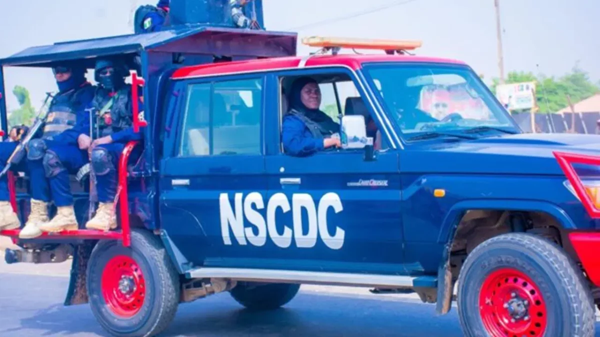
The Resource Centre for Human Rights and Civic Education (CHRICED) strongly condemns the tragic deaths of 37 Nigerians in the custody of the Nigeria Security and Civil Defence Corps (NSCDC) in Niger State following their arrest for alleged illegal mining. We extend our deepest condolences to the families and communities mourning loved ones and demand a transparent, credible, and effective investigation into the circumstances surrounding these avoidable deaths.
Whatever the allegations against the victims, the right to life and human dignity does not end at the point of arrest. A suspect remains entitled to humane treatment, due process, medical care, and protection from torture, degrading treatment, and preventable harm. Once the State takes custody of a person, it assumes a heightened responsibility for that individual’s safety and wellbeing.
According to public accounts, 67 people were detained on September 15 and 16, 2026, with 37 later reported dead in NSCDC custody. While the NSCDC initially cited a suspected disease outbreak, the true cause of death remains unclear amid concerns about overcrowding, exposure to hazardous substances, and allegations of mistreatment. Survivors and families have also reported poor detention conditions, extortion, and abuse. These allegations must be thoroughly investigated.
But beyond the deaths lies an even more disturbing question: what if no one had died? Would these young people have remained indefinitely in an overcrowded, deplorable facility—unseen, unheard, and forgotten? The tragedy forces us to confront a painful truth: if 37 people had not died, would anyone have asked how they were being treated, how long they had been held, or why they were detained under such conditions?
Illegal mining is an offence that must be addressed through lawful enforcement and due process. It cannot justify overcrowding, degrading detention conditions, abuse, or the loss of human life. The seriousness of an alleged offence does not determine whether a person’s life is worthy of protection.
Nigerians deserve answers:
- How were these individuals arrested?
- Why were they detained in such conditions?
- Who authorized their detention?
- How long were they meant to remain there?
- Who made the decisions that placed their lives at risk?
- Was there a court order permitting their continued detention beyond what the law stipulates?
CHRICED acknowledges the Federal Government’s suspension of the Niger State NSCDC Commandant and other officers, as well as the establishment of an independent investigative committee. However, suspension is not accountability. It must not become a convenient substitute for justice.
The investigation must go beyond identifying the medical cause of death. It must examine the entire chain of events—the arrests, detention conditions, supervision, medical care, complaints, and emergency response. Where evidence establishes criminal conduct, negligence, or wrongdoing, those responsible must face appropriate legal consequences, regardless of rank or position.
This incident also raises a broader question: Where is the ordinary Nigerian safe? When institutions entrusted with enforcing the law become subjects of serious human‑rights concerns, what hope remains for citizens who come into contact with them?
It must also be noted that harsh and irrational government policies have pushed many citizens into desperate survival strategies. Today, many young graduates drive commercial motorcycles, tricycles, taxis and operates street POS due to lack of employment. The high cost of fuel—now over ₦1500 per litre—has worsened an already dire situation. Many young people are being recruited into banditry, insurgency, armed robbery, cybercrime, cultism, and other criminal activities. Across Nigeria, millions of able‑bodied men and women roam the streets without knowing where their next meal will come from.
Many young Nigerians involved in artisanal mining are simply struggling to survive in communities where legitimate economic opportunities are scarce. While illegal mining remains unlawful, enforcement must be lawful, humane, and proportionate. Poverty does not make a person’s life less valuable, and allegations of illegal activity do not erase fundamental rights guaranteed by the Constitution and international human‑rights norms.
CHRICED CALLS FOR ACTION
CHRICED calls on the Federal Government and relevant stakeholders to:
- Ensure that the independent investigation is genuinely independent, adequately resourced, and composed of security experts, medical and legal professionals, and civil society actors.
- Grant full access to detention records, medical information, witnesses, and all relevant evidence.
- Publish the findings and ensure full implementation of recommendations.
- Hold individuals and institutions accountable, regardless of rank or position.
- Provide redress and support to families of the deceased and survivors.
- Protect families, survivors, witnesses, and whistleblowers from intimidation or retaliation.
- Conduct an urgent nationwide audit of NSCDC and other security‑agency detention facilities, focusing on overcrowding, sanitation, ventilation, food, water, medical care, and emergency response.
- Strengthen independent monitoring of detention facilities and ensure detainees are processed in accordance with the law.
- Address socioeconomic conditions that push vulnerable Nigerians into artisanal and illegal mining while strengthening lawful regulation of the sector.
Nigeria must not allow this tragedy to become another statistic. The lessons of past human‑rights crises—including the #EndSARS and #EndBadGovernance experiences—must reinforce the need for transparent institutions, independent investigations, and meaningful accountability whenever allegations of abuse arise.
The NSCDC is mandated to protect lives and property. That responsibility carries a corresponding duty to respect and protect the dignity of every person encountered in the course of its operations. The authority to arrest and detain carries an obligation to protect life, not extinguish it.
The lives lost must not become another entry in Nigeria’s long history of unresolved institutional failures. Human life must matter. Every life. Every time.
Signed:
Comrade Ibrahim M. Zikirullahi
Executive Director
Resource Centre for Human Rights and Civic Education (CHRICED)