
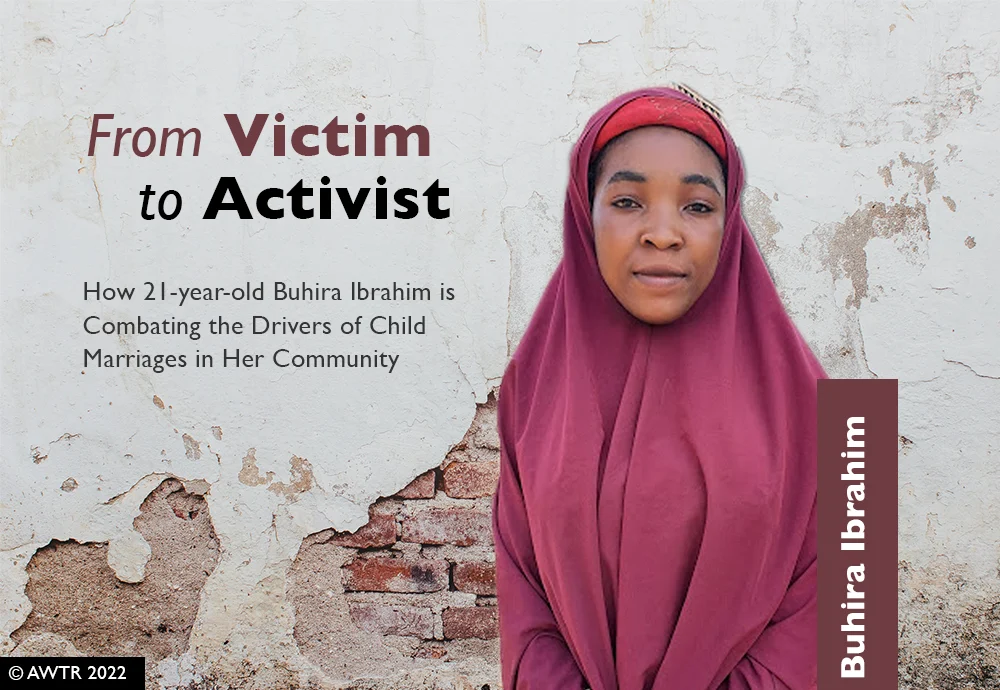
Thousands of girls continue to be victims of forced and underage marriages in Nigeria, a practice that has increased the prevalence of gender and sexual violence against women. Underage girls are frequently married off to much older men, and they have no voice against the structures that enable this practice or against those who perpetrate sexual violence against them, which includes, but is not limited to, the men to whom they are married off.
Leaving these marriages is difficult and sometimes nearly impossible as these marriages happen within communities where such practices are culturally condoned; but leaving is the only step to freedom from abusers. From the baseline study conducted by the Resource Centre for Human Rights & Civic Education (CHRICED) in 2021 on the condition of Abuja Original Inhabitants, we discovered that the devastating social and economic effects precipitated by the outbreak of the COVID-19 pandemic have been worsened by a corresponding rise in incidents of Sexual and Gender-Based Violence (SGBV).
The forcible takeover of Abuja’s original inhabitants’ lands and the devastation of their means of subsistence, in the name of relocating the Federal Capital from Lagos to Abuja, pursuant to Decree 6 of 1976, compelled many families to give out their daughters (girl children) as a means of survival. Thus, commodification of girlchildren and forced marriage practices were widespread in Abuja, Federal Capital Territory (FCT).
To deal with this menace of modern-day slavery, CHRICED, with the generous support from John D. and Catherine T. Foundation, provided support for ten FCT inhabitant organizations to enlighten, inform and increase the knowledge of women and girls about preventive measures, reporting channels and existing redress mechanisms within formal and traditional justice systems.
CHRICED noted that patriarchy and gerontocracy, which frequently encourage underage and forced marriage, also influence the content and character of the traditional justice systems. Recognizing that women, youth, and other marginalized groups are unlikely to benefit from unreformed systems, CHRICED ensures that the organizations selected for its project work with traditional structures within the communities of original inhabitants to inspire the transformation of the systems, making them more inclusive and responsive to gender rights and the interests of marginalized groups. Specifically, Association of FCT Traditional Rulers’ Wives (AWTR), and Abiodun Essiet Initiative for Girls (AEIG) were chosen to address SGBV issues.
As evidenced in the case of Buhira, tangible effects are already surfacing less than two years into the project implementation. Buhira, a 15-year-old, was forced to marry against her will by members of her family. She was married out of her village to live with her husband at Gwagwalada, some 63 miles away from her family, unprepared, and no one cared about the horrific conditions she may face in the next years.
Not only did Buhira have to cope with being married against her will, but she also endured several other hardships. Her spouse started physically and sexually abusing her. During the next six years of her marriage, Buhira was subjected to a barrage of assaults, including rape, battery, verbal abuse, forced financial dependence, and isolation from family and friends. As a result, she became emotionally and psychologically depressed and desired to flee the marriage. Buhira had no choice but to inform her husband’s family that she desires a divorce, but they will not consent. When her husband discovers her desire to leave the forced marriage, he employs extreme measures to prevent her. He threatened to kill Buhira, broke her phone, and confined her to prevent her from leaving the house or interacting with others. The freedom of Buhira was utterly taken away.
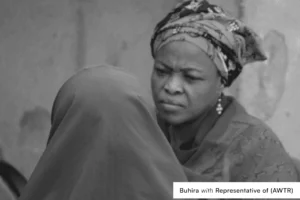
Fortunately, Buhira was introduced to the Association of FCT Traditional Rulers’ Wives (AWTR), one of the cohort groups supported by CHRICED to address sexual and gender-based violence in the FCT as part of the project of “Promoting Self-Determination of Indigenous People (SDIP), FCT, Abuja”. After hearing Buhaira’s story, the AWTR sprang into action. They offered her emotional and legal help, and in March 2022, she was granted divorce from her husband by the Sharia Court in Bwari Area Council, Abuja. Buhaira returned to her family and enrolled in school in Abuja with the assistance of the AWTR.
Buhira is now free and actively campaigning in her community and school against sexual and gender violence, forced marriages, and underage marriages. She has spoken at various state and national forums about the horrors of gender violence and why policies are needed to combat the problem and save many girl-children from cruel and degrading torment. For her efforts, she was honored with “Community Impact Award” by NAPTIP in collaboration with the Ford Foundation. This is just one out of over a hundred cases that have been reported and addressed since CHRICED’s intervention through AWTR and AEIG.
Yes, Buhira is free! But there are still thousands more BUHIRAs dying in silence and desperately crying for help. Donating to this cause will enable more girls like Buhira to be free and speak out against sexual and gender-based violence. Support the CAMPAIGN to end forced and girl-child marriage.
Donate to help free women in forced marriages and fight sexual and gender-based violence in Nigeria.